The short answer
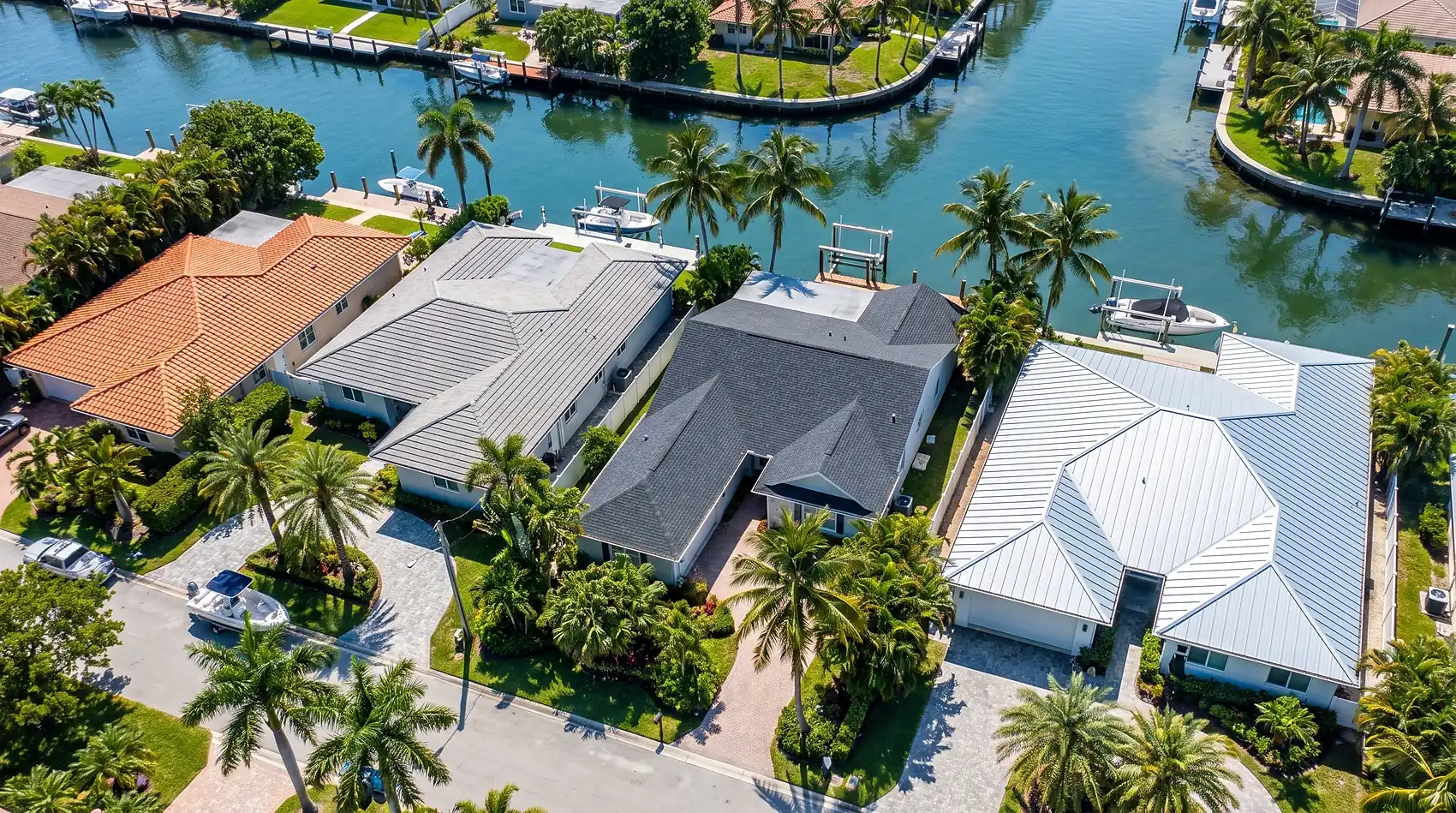
For most Fort Lauderdale homes, architectural shingle is the lowest upfront cost (roughly 15–25 years of service life in South Florida sun), concrete or clay tile lasts the longest (often 40–50+ years for the tile itself, with underlayment replaced sooner), and standing-seam metal sits between them on price with 40+ years of life and the best wind performance. Because Broward County is inside Florida's High-Velocity Hurricane Zone, every option must use HVHZ-approved products and attachment methods.
Why a roof in Broward County is a different decision
Broward and Miami-Dade are the only two counties in Florida's High-Velocity Hurricane Zone (HVHZ). That is not a marketing phrase — it is a section of the Florida Building Code with its own product approvals, attachment requirements and testing standards. A roofing system that is perfectly legal in Orlando may not be approved for a home in Fort Lauderdale, Plantation or Pompano Beach.
So before comparing materials on looks and price, the first filter is simple: does the product carry an HVHZ approval (a Miami-Dade Notice of Acceptance or a Florida Product Approval rated for HVHZ), and is the installer attaching it the way that approval requires? A state-certified roofing contractor will answer that before you ask.
Architectural shingle: the value option
Asphalt shingle is the most common roof covering in the country, and architectural (dimensional) shingle is the grade worth buying in South Florida. Three-tab shingle is cheaper but lighter, and lighter is exactly what you do not want in a wind zone.
- Service life in South Florida: roughly 15 to 25 years. Manufacturer warranties often say more; UV exposure and heat cycling here shorten real-world life compared with northern climates.
- Wind performance: HVHZ-rated shingles are tested for uplift and installed with a specified nail count and pattern. Six nails per shingle is common under HVHZ approvals, not four.
- Weight: about 2.5 to 3 pounds per square foot. No structural upgrade needed.
- Best for: homeowners who want a code-compliant, attractive roof at the lowest upfront cost, or who plan to sell within ten to fifteen years.
Concrete and clay tile: the long-life option
Tile is the signature South Florida roof for a reason. It handles heat well, it is non-combustible, and the tile itself can outlast the house's mortgage.
- Service life: concrete tile 40 to 50 years or more; clay tile can go longer. The important caveat: tile is water-shedding, not waterproof. The underlayment beneath it is the actual waterproofing layer, and underlayment typically needs replacement well before the tile does — often at 20 to 30 years. A "tile roof replacement" is frequently a re-underlayment with the tile lifted and reset.
- Weight: 9 to 12 pounds per square foot for concrete. A home that has always had tile is framed for it. Switching from shingle to tile requires a structural review.
- Wind performance: excellent when attached correctly. In the HVHZ, tile attachment (mechanical fastening, adhesive foam, or a combination) must follow the approval's tested method. Improperly attached tile is the classic post-hurricane debris.
- Best for: owners who intend to stay, want the lowest lifetime cost per year, and value the architectural look.
Standing-seam metal: the performance option
Metal has moved from commercial and coastal into mainstream residential, and standing-seam (concealed fastener) panels are the grade to specify.
- Service life: 40 to 70 years depending on the metal and coating. Aluminum resists salt air better than galvanized steel, which matters within a few miles of the coast.
- Wind performance: among the best available when clips and panel gauge match the HVHZ approval.
- Energy: light-colored or reflective-coated metal reflects a large share of solar radiation, which directly reduces attic temperature and cooling load. See our article on energy-efficient roofing.
- Weight: about 1 to 1.5 pounds per square foot — lighter than shingle.
- Best for: homeowners who want maximum storm resilience and are comfortable with a higher upfront cost and a more modern look.
What actually drives the price
Material is only part of the number. The rest comes from tear-off and disposal, decking repair (you will not know how much until the old roof is off, which is why we photograph the deck before covering it), underlayment grade, flashing and drip edge, ventilation, and permit and inspection fees. A quote that is dramatically lower than the others has usually left one of those out.
How to decide in one conversation
Ask three questions: How long do I plan to own this house? Is the structure already carrying tile? Do I want the roof to actively lower my cooling bill? The answers usually point clearly at one of the three systems. Our free Roof Report includes a written scope for the option that fits — not a pitch for the most expensive one.
Frequently asked questions
How long does a shingle roof last in Fort Lauderdale?
Realistically 15 to 25 years for architectural shingle. South Florida's UV intensity and heat cycling shorten shingle life compared with cooler climates, regardless of what the manufacturer's warranty headline says.
Is a tile roof worth it in South Florida?
If you plan to stay in the home, usually yes. The tile itself can last 40 to 50+ years, and the lifetime cost per year is often lower than shingle. Budget for underlayment replacement at roughly 20 to 30 years, because the underlayment — not the tile — is the waterproofing layer.
Can I switch from shingle to tile?
Only after a structural review. Concrete tile weighs three to four times what shingle does, and the roof framing must be confirmed adequate for the added load.
What is the HVHZ and why does it matter for my roof?
The High-Velocity Hurricane Zone is a Florida Building Code designation covering only Broward and Miami-Dade counties. Roofing products used here must carry an HVHZ approval and be installed to that approval's attachment requirements.
About the author
Energy Efficient Homes Roofing, LLC is a Florida State-Certified Roofing Contractor (license CCC1337403, verifiable at MyFloridaLicense.com) serving Fort Lauderdale and Broward County. Roof replacement, repair, solar detach and reset, wind mitigation, commercial systems and interior restoration.