
Our services
Everything above the ceiling — handled by one contractor.
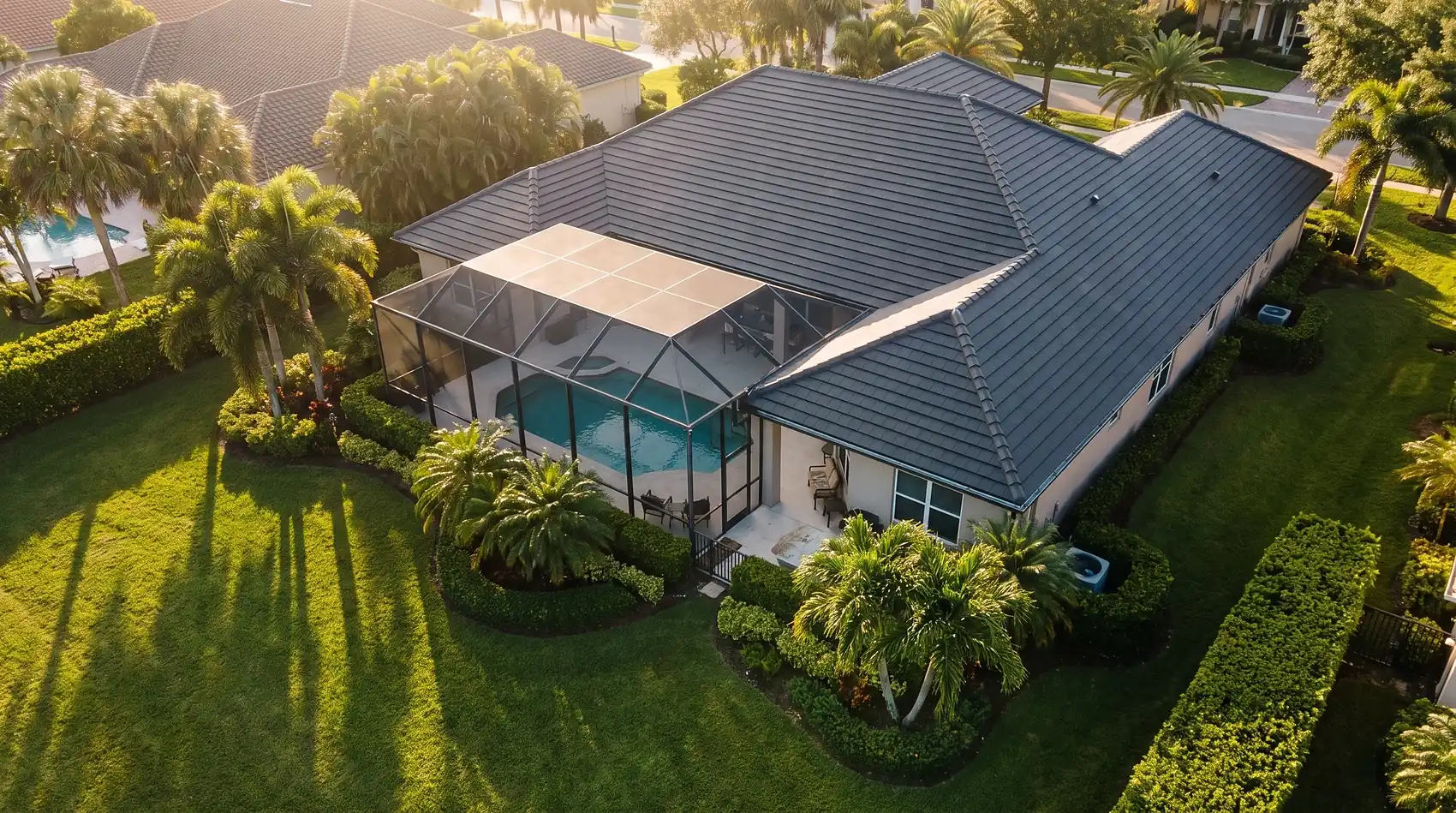
Replacement, repair, solar re-sets, wind mitigation, commercial systems and the interior work that follows a leak. All under one state-certified license, backed by more than forty years of roofing experience.
Shingle, tile & metal systems
Roof Replacement
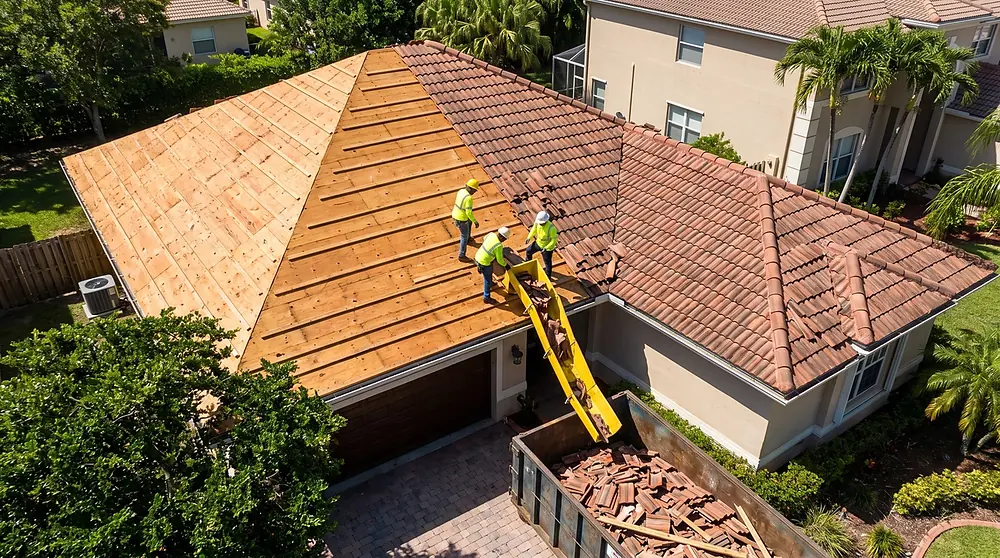
When a roof is past repair, replacement is the cheaper decision — every season you wait adds deck rot, wet insulation and interior repairs to the bill. We tear off to the deck, replace what is compromised, and rebuild the whole system: underlayment, flashing, valleys, ventilation and the surface you see.
In Broward County you are in Florida's High-Velocity Hurricane Zone, which means the underlayment, fasteners and tile or shingle we install all have to carry a current Florida Product Approval or Miami-Dade NOA and be attached to HVHZ uplift requirements. That is not a premium option — it is the code — and it is the reason a permit and a final inspection are part of every re-roof we do.
What’s included
- Architectural shingle, concrete flat and barrel tile, standing-seam metal
- Full tear-off with the deck inspected and photographed before anything is covered
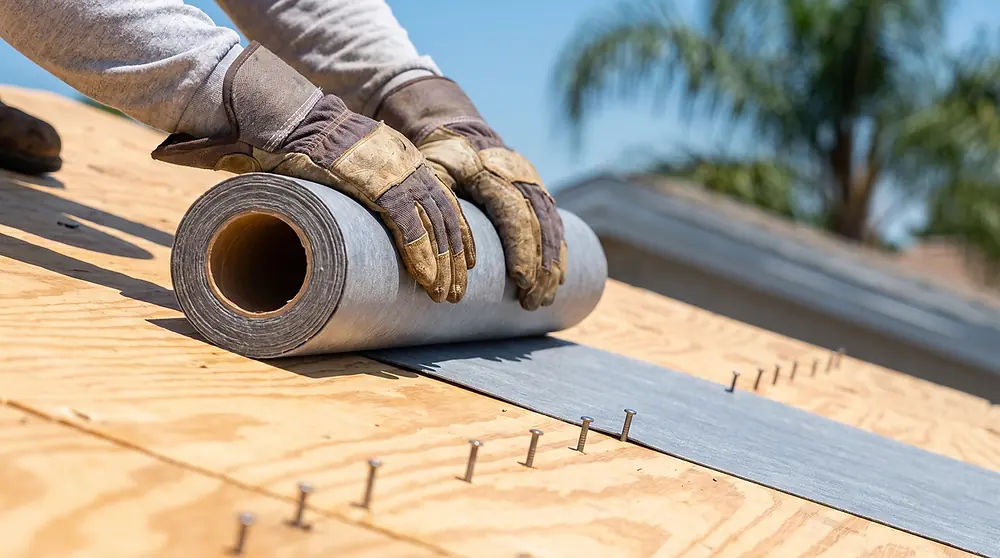
- Self-adhered underlayment across the entire deck, sealed before a single tile is set
- New flashing at every wall, valley and penetration — never reused
- Permit pulled, final inspection passed, manufacturer warranty registered in your name
How it works
- Roof ReportFree inspection with photos of what we found and a written recommendation.
- Written scope & fixed priceMaterial, colors, areas and price agreed before work starts.
- Tear-off & deck checkOld roof off, decking inspected in daylight, rot replaced — photographed.
- Dry-in, install, inspectUnderlayment, flashing and surface installed to code; county final inspection.
Timing. Most single-family re-roofs are dried-in on day one and finished within the week, weather permitting. You are never left with an open roof overnight.
Leaks, storm damage & failed details
Roof Repair
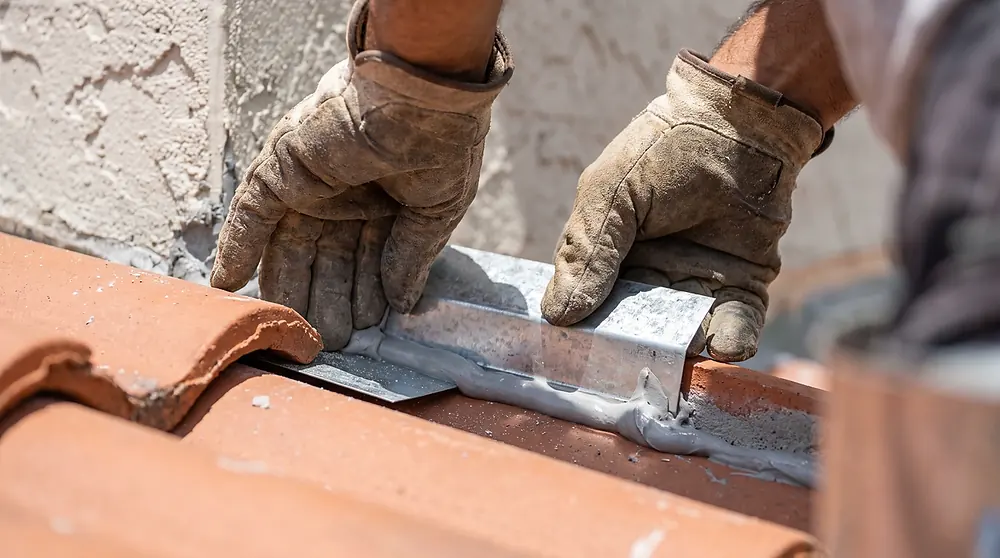
Most leaks are not where the stain is. Water travels along decking and framing before it shows up on your ceiling, which is why so many repairs fail twice. We trace the entry point, show you the photograph, and repair the cause — not the symptom.
The usual suspects on a South Florida roof are cracked or slipped tile, failed flashing at walls and chimneys, worn pipe boots, clogged valleys and underlayment that has simply aged out under the tile. Tile itself sheds water; the underlayment beneath it is the waterproofing, and when it fails the tile above can look perfect while the deck rots. We tell you plainly when a repair will hold and when it is money thrown at a roof that needs replacing.
What’s included
- Leak diagnosis with photo evidence of the actual entry point
- Cracked, slipped and broken tile replaced and re-secured
- Flashing, valley, pipe-boot and skylight repairs
- Storm and wind damage assessed and documented for your insurance claim
- Emergency tarping to stop active water intrusion
How it works
- TraceWe find where water is getting in — often nowhere near the stain.
- Show youPhotos of the entry point and the damage path before we touch anything.
- Repair the causeFixed at the source, with matching materials.
- VerifyWater-tested where possible, documented for your records and insurer.
Florida's 25% rule. Since 2022, a roof built to the 2007 code or later can generally be repaired rather than replaced even when more than 25% is damaged. We will tell you which side of that line your roof is on.
Re-roofing underneath an existing array
Solar Removal & Reinstallation
A solar array does not extend the life of the roof beneath it. When that roof reaches end of life, the panels have to come off — and putting them back is where most jobs go wrong. We handle the full sequence so you are not coordinating two trades who blame each other.
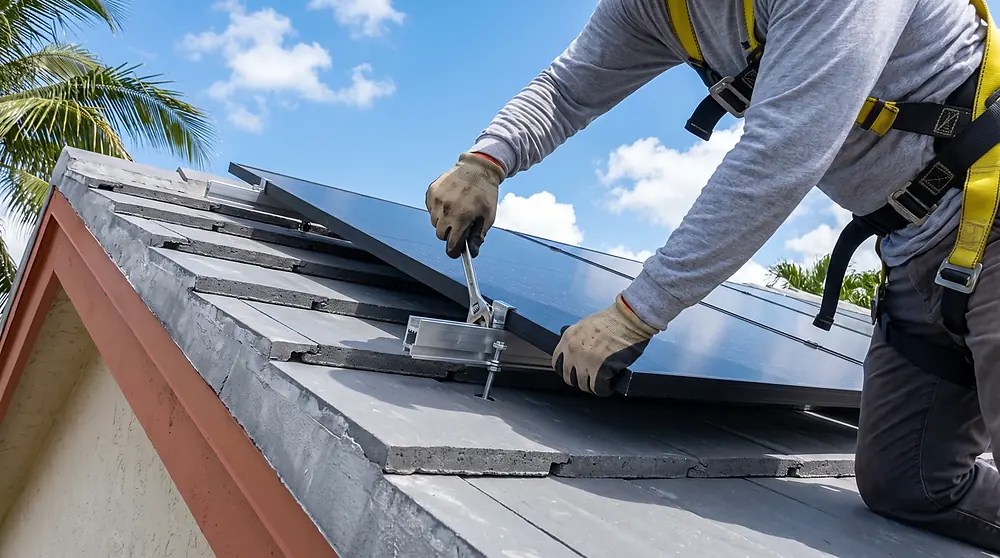
Detach-and-reset is a roofing job first and an electrical job second. The array is de-energized and disconnected, each panel is labeled and stored on site, the racking feet come off, and the roof is replaced complete — no working around penetrations. On reinstall, every standoff is flashed and sealed into the new system, the array is re-commissioned, and you get the documentation your utility and panel manufacturer expect.
What’s included
- Panels detached, labeled, stored and reinstalled in the original layout
- Electrical disconnect and re-commissioning by a licensed electrical partner
- New roof installed complete underneath — underlayment and flashing run under every standoff
- Rack penetrations flashed and sealed into the new roof, not caulked over it
- One contractor accountable for both the roof and the re-set
How it works
- AssessWe photograph the array, the racking and the roof underneath it.
- Detach & storePanels and rails come off, labeled, and are protected on site.
- Re-roofFull replacement with the penetrations planned in advance.
- Reinstall & verifyArray re-set, flashed, re-energized and tested.
Warranty. Ask before you sign: an array reinstalled by an unqualified crew can void the panel manufacturer's warranty. We put the process in writing so it does not.
Storm performance & insurance credits
Wind Mitigation
Florida insurers price your premium partly on how your roof is built — deck attachment, roof-to-wall connections, covering type and secondary water resistance. Strengthening those features improves how the roof performs in a storm and can qualify you for premium reductions.
The wind mitigation inspection (Florida form OIR-B1-1802) scores seven things: roof covering, deck attachment, roof-to-wall attachment, roof geometry, secondary water resistance, opening protection and building code year. A re-roof is the one moment several of those can be upgraded at once — ring-shank nails on the deck, a sealed secondary water barrier, straps or clips checked and documented — because the deck is exposed and the attic is accessible.
What’s included
- Roof-to-wall connections inspected and documented (clips, single and double wraps)
- Deck re-nailed to current code with ring-shank nails at the required spacing
- Secondary water resistance barrier applied across the entire deck
- Hip-roof geometry and covering credits documented with photos
- Everything packaged for your licensed inspector to complete the OIR-B1-1802 form
How it works
- ReviewWe read your current wind mitigation report and show you what is costing you.
- Upgrade during the re-roofDeck nailing, SWR and attachments handled while the roof is open.
- DocumentPhotos of every credit-relevant detail, organized by form section.
- Re-inspectYour inspector issues the updated form; you send it to your carrier.
Plain talk on savings. The discount is set by your insurer, not by us. We do the work and the documentation; the inspector verifies it; the carrier applies the credit. We will never promise a number we do not control.
Flat & low-slope systems
Commercial Roofing
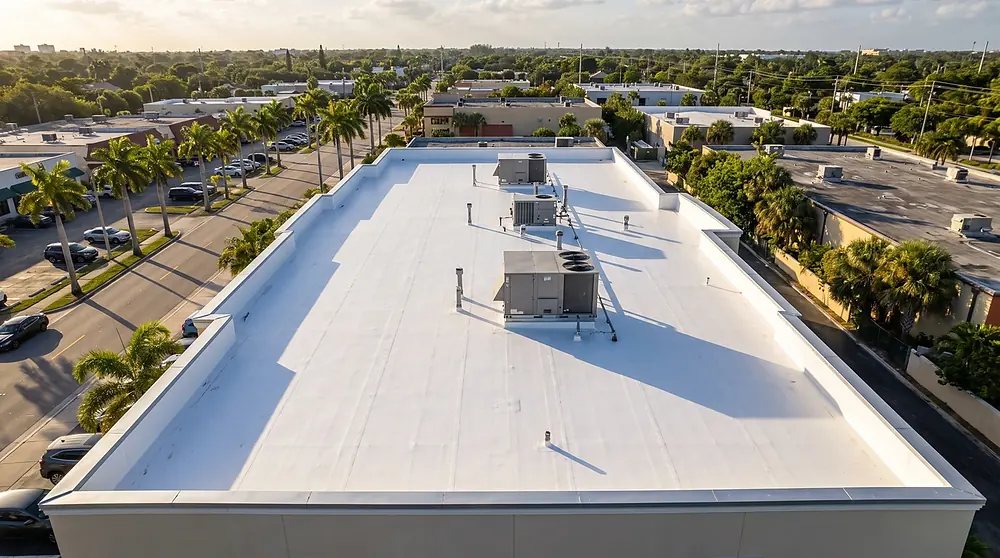
Commercial roofs fail quietly — ponding water, seam separation, failed penetrations around HVAC — until inventory or tenants get wet. We work on your schedule, keep the site clean and the entrances open, and give you a documented condition report you can budget against.
For low-slope roofs in South Florida the decision is usually between a single-ply TPO membrane, a modified bitumen system, or restoring a sound roof with a reflective silicone coating. Each has a place: TPO for heat reflection and clean welded seams, modified bitumen for foot-traffic durability, coatings when the existing membrane is dry and well-adhered and you want to buy years without a tear-off. We tell you which one fits the roof you have, not the one we would rather sell.
What’s included
- TPO single-ply, modified bitumen and silicone restoration coatings
- Drains, scuppers and tapered insulation corrected so water leaves the roof
- HVAC curbs, pipe penetrations and parapets flashed and sealed
- Work scheduled around your operating hours; site secured nightly
- Written condition report with photos for capital planning
How it works
- SurveyCore samples and moisture readings where needed; photos of every defect.
- Options & budgetRepair, restore or replace — priced side by side with expected service life.
- InstallPhased so tenants and operations keep running.
- MaintainOptional semi-annual inspections to protect the warranty.
Manufacturer warranties on commercial systems depend on installation details and inspection. We document the install so the warranty is actually enforceable.
Putting the inside right, too
Interior Restoration & Energy Upgrades
A roof leak does not stop at the roof. Wet insulation stops insulating, drywall stains and softens, and attic heat drives your cooling bill up all summer. We repair what the water damaged and improve what makes the house expensive to cool.
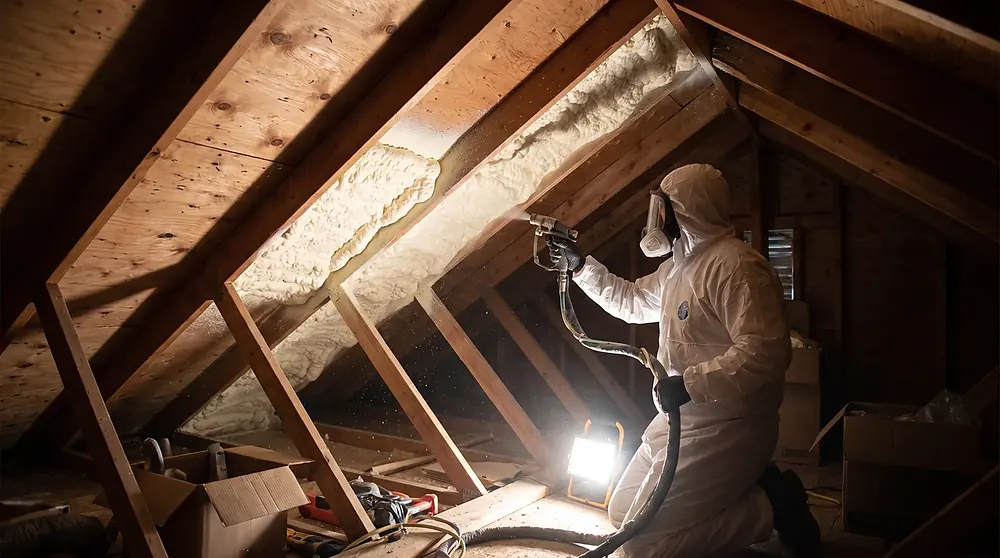
The roof is the biggest heat load on a South Florida home, and the attic beneath it is where most of that heat gets trapped. Solar-powered attic fans and balanced soffit-and-ridge ventilation pull it out; closed-cell spray foam on the underside of the deck keeps it from getting in; impact-rated windows and a right-sized, high-efficiency air conditioner finish the job. Where a project needs a specialty trade — windows, HVAC, electrical — it is performed by properly licensed partner contractors under one project plan, so you deal with one point of contact.
What’s included
- Drywall, ceiling and water-damaged insulation replaced after a leak
- Solar attic fans and soffit/ridge ventilation to move trapped heat out
- Closed-cell spray foam and radiant barrier under the roof deck
- Impact-rated windows and doors (also an opening-protection credit on your wind mitigation)
- High-efficiency air conditioning installed by a licensed HVAC partner
How it works
- AssessMoisture readings, attic temperatures and a look at how your house is losing cool air.
- PrioritizeFix water damage first, then the upgrades with the fastest payback.
- InstallRoof-side work by our crew; windows, HVAC and electrical by licensed partners.
- MeasureAttic temperature and comfort checked after, so you can see the difference.
Sequence matters. Insulation before ventilation, ventilation before a new AC. Doing them in the wrong order means paying twice.
From our Fort Lauderdale project
The part most roofers never show you.
Real drone footage — not a stock clip.
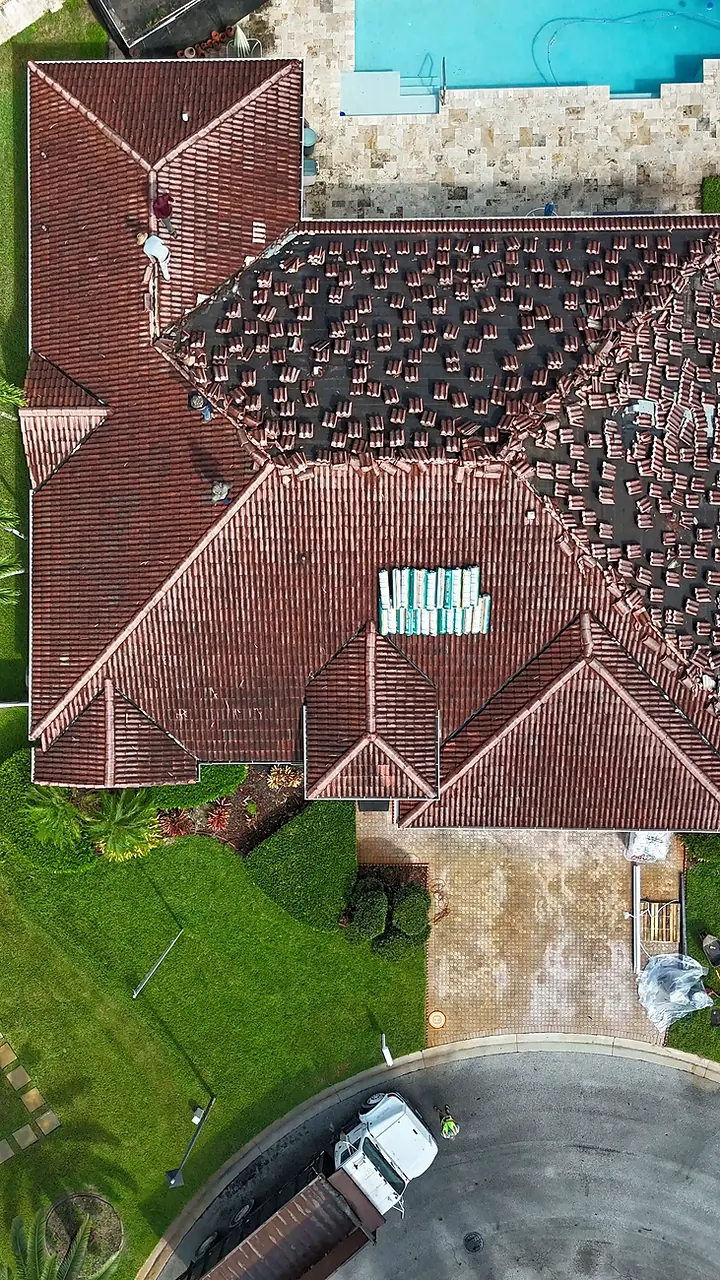
A replacement done right is mostly what happens between the old roof coming off and the new one going on. Here is that part, from the air.
- Full tear-off to the deckNo layering over the old roof.
- Deck inspected and photographedRot and gaps replaced before anything is covered.
- Sealed underlayment, then tileThe waterproofing layer goes on complete, HVHZ-approved.
Not sure which one you need?
That is what the free Roof Report is for. We inspect, document what we find, and tell you plainly whether you need a repair, a replacement, or nothing at all yet.