
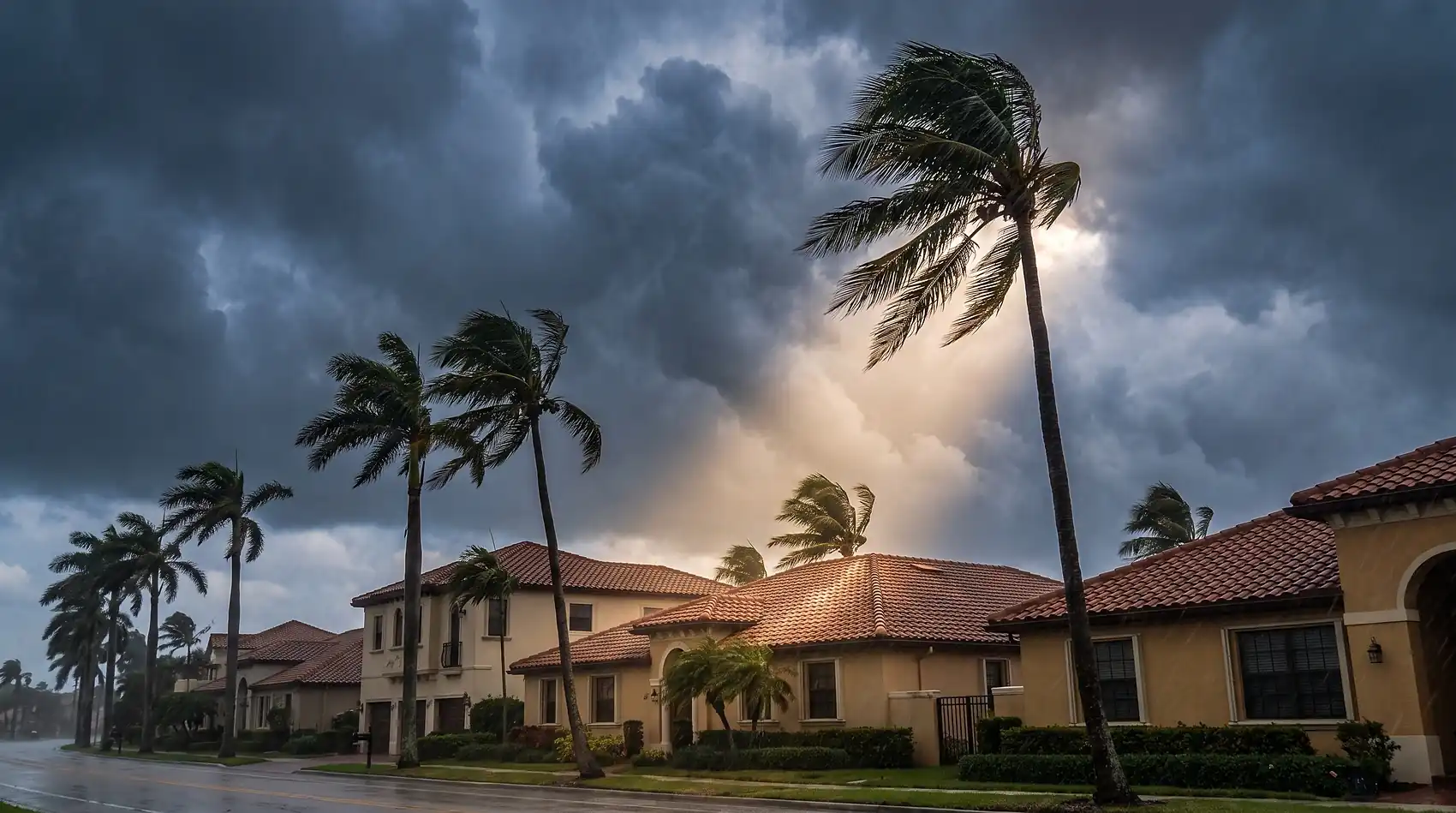
The short answer
Before hurricane season (June 1 to November 30), have the roof inspected for lifted shingles, cracked tiles, loose flashing and clogged drainage; photograph every slope for an insurance baseline; and confirm your policy's roof coverage and claim deadlines. After a storm, safety comes first — do not go on the roof — then document damage with photos, stop active water intrusion with emergency tarping by a licensed contractor, notify your insurer promptly, and get a written inspection before authorizing permanent repairs.
Before the season: the pre-storm inspection
Hurricane season runs June 1 through November 30. The roof issues that become catastrophic in a storm are almost always the ones that were already there in May.
- Lifted or loose shingle edges. A lifted shingle is a sail. Sealed-down shingles survive; loose ones peel in sheets.
- Cracked, slipped or loose tiles. Loose tile becomes windborne debris that damages your home and your neighbor's. Tile attachment should be checked, not assumed.
- Flashing and penetrations. Every vent, pipe boot, satellite mount and wall intersection is a place wind-driven rain enters.
- Ridge vents and soffits. Confirm they are secured. Soffit failure is a common way wind pressurizes an attic.
- Gutters, drains and valleys. Clear them. Water that cannot leave the roof during 10 inches of rain finds another way.
- Overhanging trees. Trim branches back from the roof. Falling limbs and abrasion are the top non-wind cause of storm roof damage.
- Rooftop equipment. Solar arrays, satellite dishes and HVAC units on flat roofs should have secure, flashed attachments.
Document before anything happens
Take clear photographs of every roof slope from the ground, plus the attic underside if accessible, and store them off-site (cloud storage, email to yourself). A dated "before" record is the single most valuable thing you can hand an adjuster. Our Roof Report includes a full photo set for exactly this purpose.
Then read your policy: what is the hurricane deductible (often a percentage of the dwelling coverage, not a flat amount), and what is the deadline to report a claim? Florida tightened claim-notice deadlines in 2022 legislation; for many policies the window to give notice of a new claim is now one year from the date of loss. Confirm the current terms with your agent — they change, and the policy controls.
If a storm is coming this week
You cannot re-roof in a week. You can: secure or remove loose rooftop items, clear gutters and drains, trim what can be trimmed, and confirm your documentation is done. If you know a section of the roof is compromised, a licensed contractor can install a temporary emergency covering before the storm.
After the storm: the first 48 hours
- Do not go on the roof. Wet tile, loose decking and downed lines have injured more people than the storms themselves. Photograph from the ground and from inside the attic if it is safe.
- Stop the water. If water is coming in, emergency tarping by a licensed roofing contractor stops the damage clock. Ask for the tarping to be documented and invoiced — it is generally a covered mitigation expense, and insurers expect you to prevent further damage.
- Notify your insurer promptly. Start the claim; you do not need a complete damage list to open it.
- Get a written inspection before permanent repairs. A licensed contractor's documented assessment — photos, scope, cause — supports your claim and keeps you clear of the 25 percent rule surprises described in our article on Florida's roof repair law.
- Be careful who knocks. Post-storm door-knockers and out-of-state crews are a well-known problem in South Florida. Verify any contractor's license on the state DBPR portal before signing anything. Ours is CCC1337403.
Assignment of benefits and post-storm contracts
Read anything you sign after a storm. Florida law changed in 2023 to eliminate new assignment-of-benefits agreements on residential property policies, but pressure tactics and problem contracts have not disappeared. A legitimate contractor gives you a written scope and price, does not require you to sign over your claim, and is happy to wait while you check the license.
The long view
The homeowners who come through a hurricane season with the least damage are the ones who treated the roof like the safety system it is — inspected annually, repaired promptly, documented thoroughly. The free Roof Report is the easiest way to start that habit before June.
Frequently asked questions
When should I have my roof inspected for hurricane season?
In spring, before June 1, and again after any named storm. Pre-season inspection catches the loose shingles, tiles and flashing that become major losses in high wind.
Is emergency roof tarping covered by insurance?
Emergency measures to prevent further damage are generally a covered expense under most Florida homeowners policies, and insurers expect you to mitigate. Keep the invoice and photos.
How long do I have to file a hurricane roof claim in Florida?
Florida law tightened claim-notice deadlines in 2022; for many policies notice of a new claim must be given within one year of the date of loss. Confirm your policy's current terms with your agent.
Should I sign with the first roofer who shows up after a storm?
No. Verify the contractor's license on the Florida DBPR portal, get a written scope and price, and never sign over your insurance claim. Post-storm door-knocking crews are a known problem in South Florida.
About the author
Energy Efficient Homes Roofing, LLC is a Florida State-Certified Roofing Contractor (license CCC1337403, verifiable at MyFloridaLicense.com) serving Fort Lauderdale and Broward County. Roof replacement, repair, solar detach and reset, wind mitigation, commercial systems and interior restoration.