The short answer
Flashing helps direct water away from roof joints and openings. A leak near a wall, vent, or skylight may involve these details even when the surrounding roof covering looks intact. Ask for photographs and a diagnosis of the connection before choosing a repair.
What flashing does for your roof
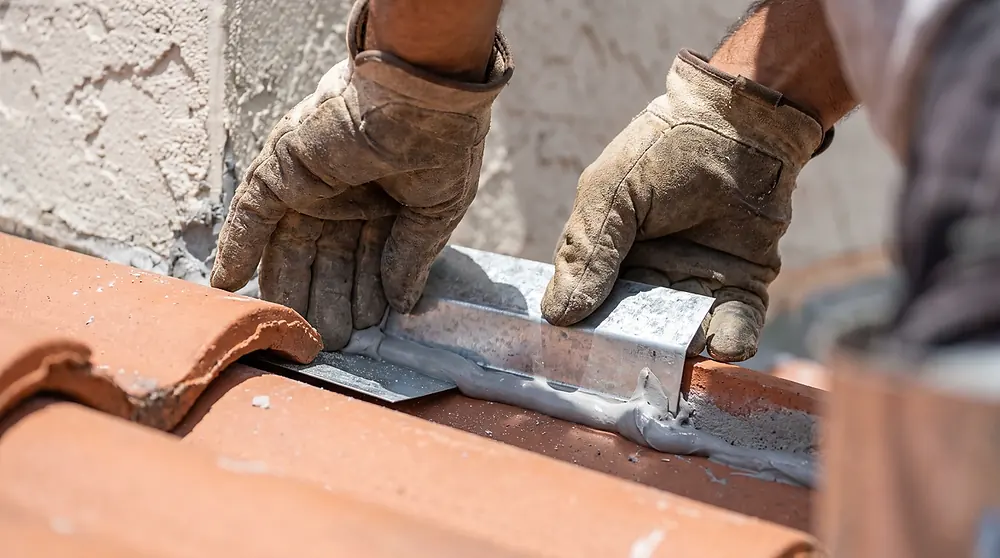
A roof has edges, changes in direction, and places where equipment or building components pass through it. Those connections need their own water-management details. Flashing is part of that protection; it is not simply a decorative strip around the finished roof.
GAF’s explanation of roof flashing identifies roof joints, penetrations, and roof-to-wall intersections as locations where flashing helps control water entry. The appropriate detail depends on the roof system and the connection.
For a homeowner comparing repair proposals, the useful question is specific: which connection is failing, and how does the proposed work restore it? Ask the roofer to point out the location on a photograph so you can understand the scope from the ground.
Give the roofer a useful history of the leak
Record when you first noticed the problem and what the weather was doing. Does the stain grow during a long rain, or only when wind drives rain toward one side of the house? Have nearby walls, windows, roof equipment, or tiles been repaired recently?
These observations help organize an inspection, but they do not establish the source. A stain beside a wall does not prove the flashing is at fault. Water can travel before it becomes visible indoors; our guide to tracing roof leaks explains that problem.
- Share dated interior photographs and earlier repair invoices.
- Identify the room and approximate location without climbing onto the roof.
- Tell the contractor about prior sealant applications or repeated patches.
- Ask which nearby building components also need to be evaluated.
Ask what the repair changes beneath the surface
A proposal should explain more than “seal flashing.” Ask whether the work involves exposing the connection, replacing damaged components, addressing surrounding roofing, or another defined repair. The recommendation should follow the observed condition.
Sealant can be part of an appropriate roof detail, but a photograph of fresh sealant alone does not show whether the underlying connection was corrected. Ask what the contractor found, what was repaired, and what remains concealed or uncertain.
For a tile roof, ask whether tiles must be removed and how the underlying layers will be handled. Our tile underlayment guide explains why an intact-looking surface does not tell the whole story.
Request written boundaries for the repair, the process for approving additional work, and the applicable warranty terms. If proposals differ, use our roofing estimate checklist to compare the actual scope.
Keep a record of the completed repair
Ask for before-and-after photographs and a plain-language summary. Save them with the invoice and note which roof area was addressed. If another stain appears later, those records make the next inspection more useful.
Discuss what follow-up is appropriate and whom to contact if symptoms return. If the work has limits, have them explained before approval rather than discovering them after the next rain.
Energy Efficient Homes Roofing provides roof repair and replacement services in Fort Lauderdale and Broward County. A Free Roof Report is a starting point for discussing the condition of your roof and the next step.
Frequently asked questions
Does every leak near a vent need new flashing?
No. The location is a clue, not a diagnosis. Ask the roofer to identify the evidence for the source and explain whether the flashing, surrounding roofing, or another component needs work.
Can I fix flashing by adding caulk myself?
Avoid choosing a repair before the connection has been evaluated. An unsuitable patch can hide the condition without resolving it. Leave roof access and repair details to a qualified roofing professional.
Does a flashing problem mean the whole roof needs replacement?
Not automatically. The condition around the connection, the roof system, and the ability to make a compatible repair determine the options. Ask why the recommended scope is appropriate for your roof.
About the author
Energy Efficient Homes Roofing, LLC is a licensed and insured Florida roofing contractor (CCC1337403), serving Fort Lauderdale and Broward County. Our team brings 40+ years of roofing experience to inspections, repairs, and roof replacement.