
The short answer
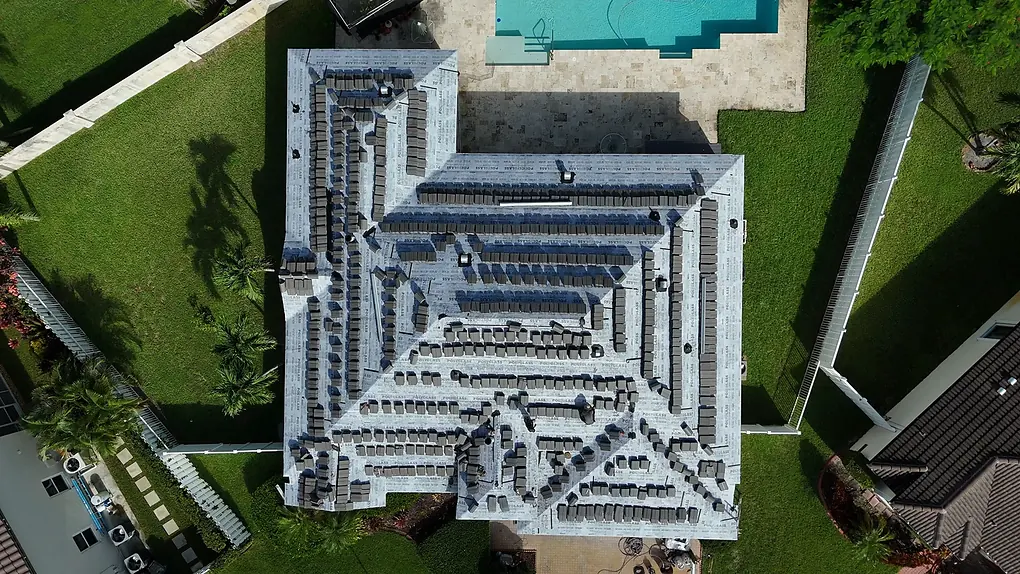
The tiles are only one part of a tile roof. Underlayment is the protective layer beneath them, and its condition matters even when the visible tiles look good. A leak needs a diagnosis of the roof system, including flashing and transitions, before the repair scope is chosen.
Why the layers below the tile matter
From the driveway, it is easy to judge a roof by its color and the condition of the tiles. That view cannot tell you everything about the layers underneath. A recently cleaned surface is not evidence that the concealed components are in good condition.
The Tile Roofing Industry Alliance’s installation manual describes tile roofing as a water-shedding assembly and emphasizes the importance of underlayment where water gets past the surface, including through wind-driven rain or flashing problems. The tile, underlayment, flashing, and roof deck need to work together.
That is a system principle, not a prescription for your home’s installation. Product requirements and the details appropriate to a Broward County property must be evaluated for the actual roof.
What to ask when a tile roof leaks
Start by describing the problem instead of choosing the repair yourself. Tell the roofer when the stain first appeared, whether it changes with wind or rain, and what repairs have already been attempted. Share available invoices and photographs.
Ask the inspection to distinguish observations from assumptions. Which conditions are visible? Which areas were inaccessible? Is further investigation needed before a firm recommendation can be made?
- What evidence points to the suspected entry point?
- Were nearby walls, valleys, and penetrations considered?
- What can be established about the underlying layers?
- What photographs explain the recommended scope?
A ceiling stain may not sit directly beneath the entry point. Our article on how roof leaks travel explains why tracing the source matters more than patching the nearest visible tile.
Compare a localized repair with broader work
Ask the contractor to explain why a localized repair would be sufficient, or why a larger area needs attention. The recommendation should connect to the findings, the surrounding condition, and the ability to complete a compatible repair.
For any proposal involving tile removal and reinstallation, ask how the tile will be handled, whether suitable replacements are available, and how breakage or previously hidden damage will be addressed. Request clear boundaries for the work rather than an undefined promise to fix the leak.
If broader replacement is recommended, ask what makes repeated spot repairs a poor option in this case. A written explanation lets you compare alternatives without relying on the age of the roof alone.
Use the roof’s history to improve the conversation
Gather the original installation date if known, previous repair locations, and any documents identifying the installed products. Missing paperwork does not prove a defect; it simply means some details may need to be established during inspection.
Keep new photographs and repair records in the same file. When discussing a proposal, ask which findings support it and what limitations remain. Our guide to comparing roofing estimates provides a practical way to record inclusions and exclusions.
Observe the roof from a safe ground-level location. Leave tile lifting and roof access to qualified professionals. You do not need to expose the underlayment yourself to start a useful conversation.
Frequently asked questions
Does intact tile prove the underlayment is fine?
No. The visible tile surface does not reveal the full condition of concealed layers or flashing details. An inspection can explain what is known and whether additional investigation is needed.
How long does tile-roof underlayment last?
There is no single reliable lifespan for every roof. The installed product, roof details, exposure, installation, and maintenance history matter. Ask for an assessment of the actual system rather than a replacement decision based only on a generic age range.
Can the existing tiles always be reused?
Do not assume so. Ask the contractor to evaluate condition, compatibility, availability of matching replacements, and the proposed work. Any reuse plan and its limitations should be written into the scope.
About the author
Energy Efficient Homes Roofing, LLC is a licensed and insured Florida roofing contractor (CCC1337403), serving Fort Lauderdale and Broward County. Our team brings 40+ years of roofing experience to inspections, repairs, and roof replacement.