
The short answer
Solar detach and reset is the process of safely removing a solar array so the roof beneath it can be replaced, then reinstalling the same panels on the new roof. Done correctly it involves electrical shutdown and disconnection, labeling and storing panels and racking, removing the old roof and mounting points, installing the new roof with properly flashed new mounts, and reinstalling and recommissioning the array. The roof under an array does not last longer because panels are on it — and every mounting point is a penetration that must be re-flashed on the new roof.
The problem nobody mentions at the solar sale
A solar array is typically warrantied for 25 years. A shingle roof in South Florida lasts 15 to 25. Many homeowners installed solar on a roof that already had a decade of age on it — which means the roof reaches end of life with the array still producing power and still under warranty. The panels have to come off.
If that is your situation, you are not alone, and the job is routine for a contractor who does it regularly. The mistakes happen when it is treated as two unrelated jobs by two companies who point at each other when something goes wrong.
What detach and reset involves, step by step
- Electrical shutdown and disconnection. The system is de-energized at the inverter and disconnects, and the array wiring is safely disconnected. Where the electrical work requires it, a licensed electrical or solar contractor handles the disconnection and reconnection; the roofing contractor coordinates the sequence so nothing waits on anyone.
- Labeling and removal. Every panel, optimizer or microinverter, and section of racking is labeled by position so it goes back exactly where it was. Panels are stored flat, protected and off the ground.
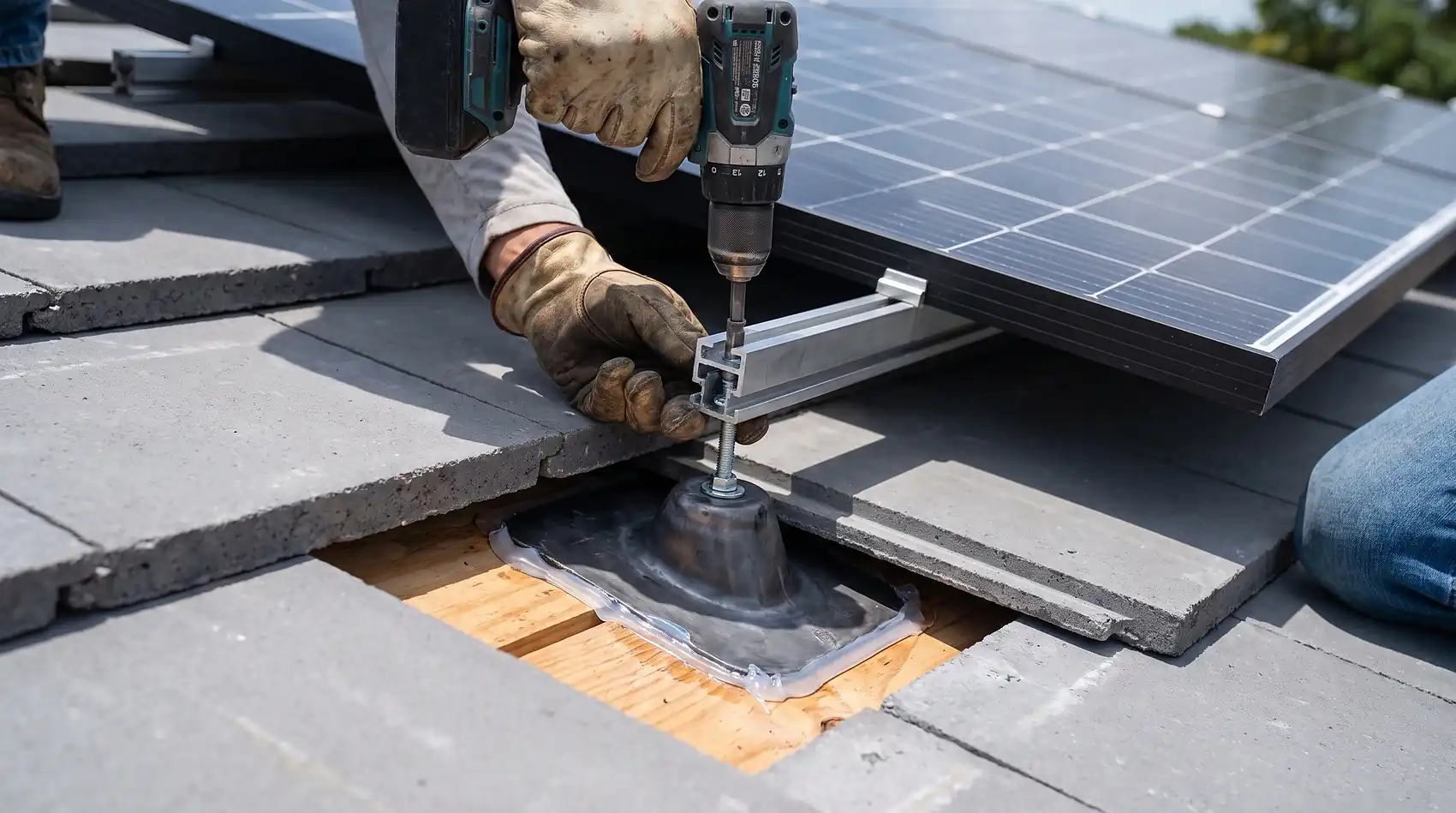
- Mount removal. Roof attachments (L-feet, standoffs, rail mounts) are removed with the old roof. On tile roofs this often means removing tile hooks or replacement flashings as well.
- Roof replacement. The new roof is installed complete — underlayment, flashing, covering — with no working around obstacles. This is the entire point: the new roof is a full, uninterrupted system.
- New mounts, properly flashed. New attachment points are installed into rafters or trusses (not just decking) and flashed into the new roof according to the roofing product's approval. On shingle, that means flashed standoffs under the shingle course; on tile, flashed hooks or tile-replacement mounts. Sealant alone is not flashing.
- Reinstallation and recommissioning. Racking, panels and wiring go back by label. The system is reconnected, tested, and confirmed producing at its prior output.
Why one accountable contractor matters
The most common solar-and-roof failure we see is a leak at a mount. The roofer says the solar company's mount caused it. The solar company says the roofer's flashing caused it. The homeowner pays for the interior repair. When a single contractor is responsible for the roof and coordinates the detach and reset, there is one phone number and one answer.
What it costs and what affects it
Detach and reset is priced per panel, plus any electrical work, plus the new mounting hardware and flashing. The variables are panel count, roof type (tile takes longer than shingle), whether the existing racking is reusable, and how accessible the roof is. It is a real cost — but it is far less than replacing the array, and far less than the interior damage from leaving a failing roof under it.
Warranty considerations
Two warranties are in play: the panel manufacturer's and the original installer's workmanship warranty. Manufacturer warranties generally survive a professional detach and reset. Some installer workmanship warranties have conditions about who performs removal — check the paperwork before scheduling, and keep the labeling and reconnection records we provide.
If your solar was installed on a roof with less than ten years left
The best time to replace the roof under solar was before the solar went on. The second-best time is before the roof fails. If your roof is showing the signs in our repair article, book the Roof Report and get a straight answer about how many years the roof under your array has left.
Frequently asked questions
Do solar panels have to be removed to replace a roof?
Yes. The roof covering under the array has to come off for a proper replacement, and every mounting point has to be re-flashed on the new roof. Working around panels leaves an incomplete system.
How long does solar detach and reset add to a roof replacement?
Typically one to two additional days depending on panel count and roof type — usually a day to remove and a day to reinstall and recommission after the roof is complete.
Will removing my solar panels void the warranty?
Manufacturer warranties generally survive a professional detach and reset. Check your original installer's workmanship warranty for conditions about who performs removal, and keep the documentation.
Can I re-roof around the solar panels instead?
You can, but you should not. Every mount is a penetration, and the roof under the array ages on the same schedule as the rest. Roofing around panels leaves the area that is hardest to inspect as the weakest part of the system.
About the author
Energy Efficient Homes Roofing, LLC is a Florida State-Certified Roofing Contractor (license CCC1337403, verifiable at MyFloridaLicense.com) serving Fort Lauderdale and Broward County. Roof replacement, repair, solar detach and reset, wind mitigation, commercial systems and interior restoration.