The short answer
Recurring standing water deserves a professional look at both the roof surface and the drainage path. Document where water collects and when it clears, without climbing onto the roof. The next step may involve maintenance, a repair, or a more detailed drainage assessment; the observation alone does not determine the solution.
Start with a useful record of the problem
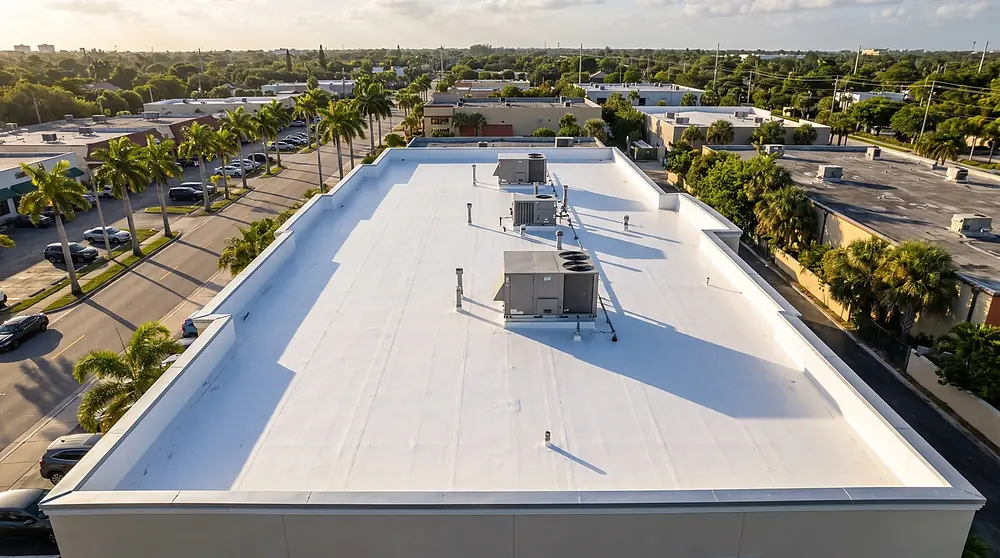
A flat-roof addition or commercial building in Broward County can be difficult to observe from the ground. If water is visible from a safe indoor viewpoint, note its location and take a photograph. Do not climb onto the roof to check the depth or attempt to move the water.
Record when the rain stopped, when the photograph was taken, and whether you have seen the same pattern before. A dated sequence is more useful than a single image without context. Include any interior stains or reports from occupants.
Avoid treating one online time limit as a universal verdict on the roof. Ask the contractor to interpret the condition using the actual roof design, installed system, and applicable manufacturer guidance.
Ask about the whole drainage path
The inspection should consider where water is intended to go and what may be interrupting that route. Ask whether the observed issue relates to debris, the outlet, the roof’s shape, or another condition that needs further evaluation.
GAF’s roof maintenance guidance highlights keeping drainage components clear as part of caring for a roof. Maintenance matters, but an apparently clear outlet does not establish that every part of the system is working correctly.
- Which outlets serve the affected roof area?
- Is the water collecting in the same location each time?
- What visible evidence supports the proposed cause?
- Does the drainage need assessment beyond routine cleaning?
Leave roof access, drain work, and any alterations to qualified professionals. An improvised opening or patch can create a different problem instead of resolving the original one.
Separate maintenance from a repair recommendation
Request a written distinction between debris removal, repair of an identified defect, and changes intended to improve drainage. Those are different tasks and should not disappear into a vague line item called “roof maintenance.”
If a coating is proposed, ask what it is intended to accomplish, what preparation is required, and whether the existing conditions are compatible with that product. Do not assume a coating changes the route water takes off the roof.
If replacement is being considered, ask how the proposal addresses the documented concern. Our TPO and modified-bitumen comparison introduces material options, while our estimate guide helps organize the scope questions.
Keep a maintenance and follow-up record
Keep inspection photographs, service dates, invoices, and product information together. Ask the roofer what follow-up observations would show whether the work addressed the original issue and when another inspection is appropriate for your property.
For a building with several occupants, designate one person to collect reports. Record the room or roof area involved so separate issues are not accidentally combined. If the building has rooftop equipment, keep a record of service visits and share any relevant changes with the roofer.
Report an active interior leak promptly. If a ceiling appears to sag or water is near electrical equipment, keep people away from that area and seek appropriate professional help. Do not wait for a maintenance appointment to address an immediate hazard.
Frequently asked questions
Does standing water mean I need a new roof?
Not by itself. The cause, roof condition, and suitable repair options must be evaluated. Ask for findings that explain the recommendation rather than deciding from a photograph alone.
Can I clear the roof drain myself?
Arrange professional access and maintenance, particularly when the roof is wet or its condition is unknown. You can help by sharing safe observations and identifying the problem area.
How often should a flat roof be inspected?
Ask for a schedule suited to the roof system, condition, surroundings, and manufacturer guidance. Also ask when significant weather or new symptoms warrant an additional inspection.
About the author
Energy Efficient Homes Roofing, LLC is a licensed and insured Florida roofing contractor (CCC1337403), serving Fort Lauderdale and Broward County. Our team brings 40+ years of roofing experience to inspections, repairs, and roof replacement.